Theryn Planner
Production Planning Based on Reality — Not Spreadsheets
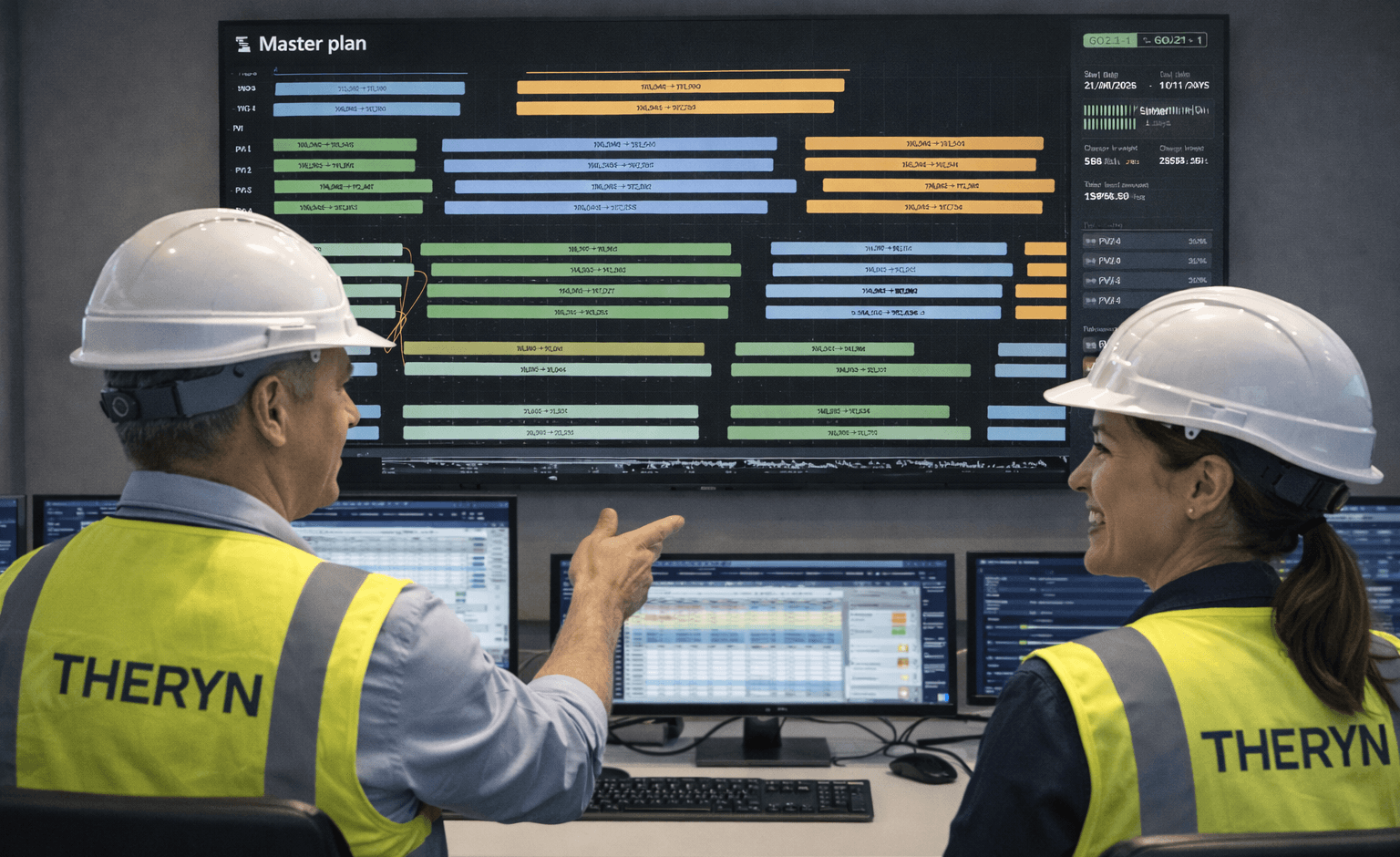
Theryn Planner transforms production planning from static spreadsheets into a dynamic, connected system. Plans are continuously aligned with real operational status, enabling fast re-planning and better long-term decisions.
Key Features
Automated Production Planning
Generate complete production plans automatically based on biology, capacity, and constraints. Reduce manual work and planning errors while increasing consistency and predictability.
Live Connection to Operations
Planner is directly connected to Theryn Operations, continuously reflecting actual status in the facility. When reality changes, plans can be updated immediately — no rebuilding from scratch.
Operational Work Lists
Production plans are translated into clear work lists for the operations crew. Planned actions become executable tasks, ensuring alignment between planning and daily execution.
Layout-Aware Optimization
Production plans respect your actual tank layout, department structure, and transfer constraints. Optimization is done on your facility — not generic assumptions.
Fast Scenario Iteration
Adjust planning inputs and instantly see the impact on growth, biomass, transfers, and harvest timing — enabling real scenario comparison without long recalculation times.
Batch-Level Planning Inputs
Fine-tune each planned batch individually. Adjust inputs such as start weight, density, feeding assumptions, and constraints to reflect biological and operational reality.
Custom SGR & Temperature Profiles
Use your own SGR tables and temperature profiles. Planning reflects your genetics, environment, and historical performance — not generic growth curves.
Plan vs Actual Analysis
Compare planned outcomes directly against actual growth and production data through integration with Theryn Reports, enabling continuous learning and improvement.
Key Benefits
More Predictable Production
Improve forecast accuracy and production stability through connected planning and execution.
Reduced Risk
Identify biological and operational risks early and adjust plans before they impact results.
Better Capacity Utilization
Make better use of existing tanks, departments, and infrastructure.
Stronger Decision Support
Support long-term strategic decisions with data-driven production scenarios.